The Digital Disruption and Sport

The Digital Disruption and Sport

Recently I was asked to speak at the Business of Sport Summit BOSSummit in Sydney where I participated on a panel of speakers on the topic of:

Changed Game: Predicting and Preparing for the Future in Sport
As sport changes both on and off the field, innovation has become a key priority for all industry stakeholders. What can we predict about the future direction of sport in the region? How can sports executives adapt the dynamic energy of sport to build new audiences and create new business models? Which sports can we expect to experience growth in the next decade, and which will experience decline?

When I first received this topic at hand, I found it rather thought-provoking. All sports have evolved over the last 100-150 years and to dabble at the thought of how sport can look like in the future is confronting.

To me the first topic that sprung to mind was the digital disruption we are currently experiencing and how sports and entertainment has or has not adapted. To add to this is the in-home experience fans are now able to experience vs the in-stadium experience which goes hand in hand with the extraordinary television rights deals many sports are now achieving.

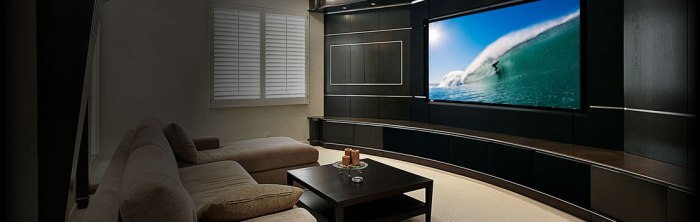
The in-home experience of consuming sport is getting better and better and changing in lightning speed with home theatre systems that provide HDTV and surround sound, smartphone streaming and video-on-demand, the fans of today have plenty to choose from so we know it can be hard to get them out of their lounge rooms and into the stadium / arena for a live experience.  With the rapid pace that technology is developing, this challenge undoubtedly presents an increasing issue.
residential-services-top1

The TVs are getting bigger, high-definition viewing with sound bars and all the specialty commentary and stats one could ever desire creating an amazing experience, all in the proximity of one’s own fridge with cheap food and beer.

In contrast, what was the in-stadium experience like? Everyone talks about fan engagement, the buzz words in sports and entertainment at the moment, but what does all this mean and who is doing it well?

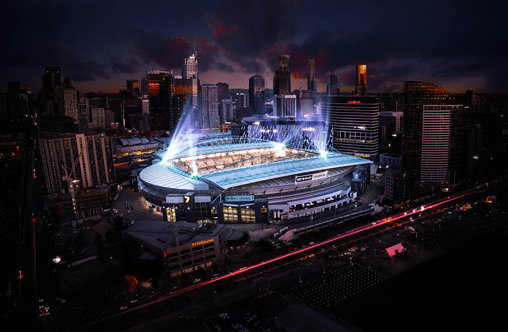
I was confronted with the challenge of the in-stadium experience only in the recent two years in my role as Director of Sales, Marketing and Communications of a world-class stadium, Etihad Stadium where I was the project lead for the connected stadium strategy to help improve the fan experience at the stadium and also provide an environment where we provide a customised experience for the variety of fans and clubs that made the stadium home (5 x AFL Clubs, 1 x A-League Club and 1 x Big Bash League Club).

The challenge was, how can we present the stadium like a true home ground for the specific tenant club fans at their home games and how could we provide the 1.7 million fans that visit the stadium each year the ultimate live experience.  The other challenge was, how do we find the millions required to transform the live experience in-stadium.

We have all experienced packed stadiums and arenas where you are unable to make a phone call or browse the internet, Facebook or other social sites due to congestion. In today’s world of technology which we rely upon heavily, this is a frustrating experience.

When we embarked on this project, we looked widely within Australia of examples of best practice. Our search didn’t take long at all as it became quickly apparent that despite it being 2013, many stadiums, venues and sports across Australia had not been active in this space of innovation and connected stadiums which in turn could create better fan engagement environments.
screenshot
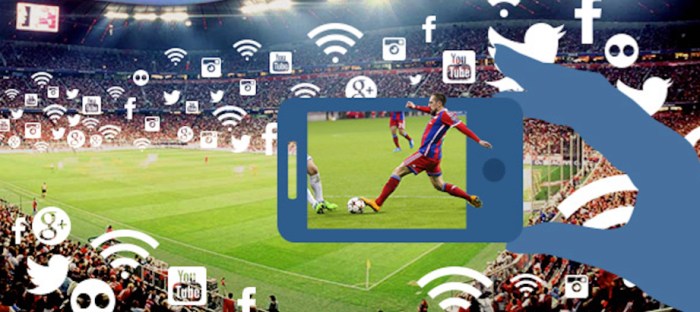
What we did know was that the next generation of fans and their behaviours had changed in the last decade.  This picture highlights what goes on at a live event in this day and age.  How were venues responding to the increasing demand for connectivity and a better live fan experience?
At the end of 2013, it was timely that Telstra commissioned several venues to their boardroom in Sydney in an attempt to collaborate on the idea of connected stadiums in a round table discussion. In the room, I found a number of executives such as myself who were challenged at the thought? What does all this mean? Credit to Telstra and Kathy-Ann McManus for inspiring this very open and fluid meeting and the discussion that followed demonstrated to me the lack of expertise and knowledge in the room. The only venue at that time that had embarked on installing a high-definition Wi Fi network was ANZ Stadium.

I recall Daryl Kerry, the CEO of ANZ Stadium telling the room that they had embarked on the journey and whilst they weren’t fully understanding what this all meant, they were looking forward to learning about it as they went through the process. I looked at Daryl at the time as a leader and innovator. He was prepared to plunge into the world of a connected stadium and invest a considerable amount of financial resources but understood that as much as you prepare for a new and brave world, “the risk of inaction is far greater than the risk of action”.

This term is very fond to me as I first heard it in a meeting with the CEO of IBM at the time, Andrew Stevens, when they were responding to our request for proposal for the installation of the high density Wi Fi and iPTV network at Etihad Stadium several months later. I recall vividly in a meeting him saying,

“Gentlemen, you can write all the papers you want on a connected stadium project, but at the end of the day, the risk of inaction is far greater than the risk of action”. He proceeded to say “the longer you take to come to grips with the new world of innovation and technology and all that comes with it, it becomes a compounding effect and the further you fall behind. The stadium experience in Australia is quickly becoming archaic and we need to move quickly in the world of connectivity. Your customers demand it now and will increasingly demand it in the future”.  Andrew Stevens, IBM Australia – April 2014

This round table discussion at Telstra prompted us at Etihad Stadium to embark on a fact-finding mission globally. What were stadiums doing overseas when it came to the new connected world and how did they create a better environment for their tenants and rights holders. This lead our appointed consultant for the project, Paul Yeomans and myself to the USA where we visited stadiums and arenas in Kansas City, Miami, New York and Los Angeles.

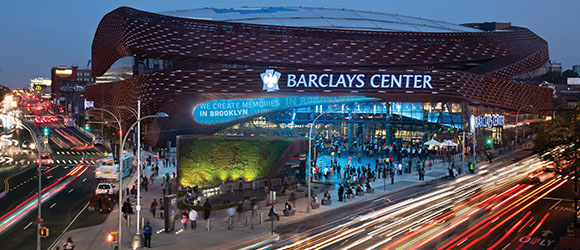
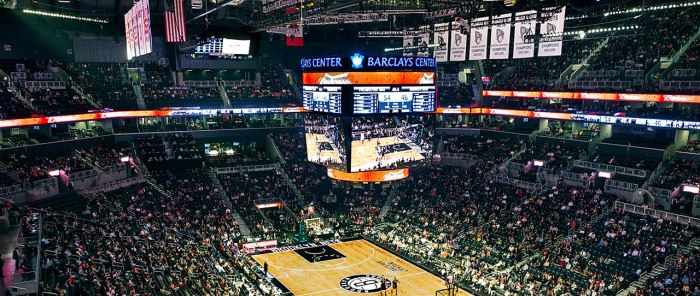
The Americans were well advanced in this space and we took a lot of inspiration, particularly from the Barclays Center in Brooklyn, home to the Brooklyn Nets. We attended the second NBA play-off between Brooklyn Nets and Miami Heat who we had incidentally also seen play in the first playoff in Miami.

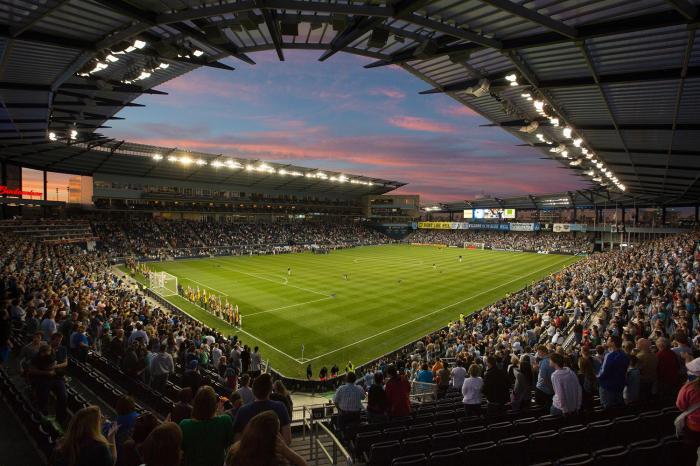
Another stadium which presented me with a great experience was in Kansas City of all places at Sporting Park the home of MLS franchise Sporting KC.  A bespoke stadium accommodating 21,000 people was purpose-built to provide a first class live football experience. Sporting KC  This is what the CEO of Sporting KC, Robert Heinemann, had to say about the live experience they created at Sporting Park.

“Building on our technology strategy which centers around enhancing the fan experience, Sporting Kansas City chose Experience based on their innovation and sole focus on the fan. Experience’s mobile technology, integrated into our Uphoria app, will be fast for fans to use as well as very simple and intuitive. Sporting KC fans will be further empowered to personalize their game day experience, whether it’s having the ability to purchase an on-field experience or simply enabling a seat move to get closer to the action, our fans will be able to use technology to create a memory and make the most of their visit to Sporting Park.”

The high density Wi Fi we experienced at both the Barclays Centre and Sporting Park was more powerful than the normal residential Wi Fi, the LED displays lit up the stadium, the thousands of iPTV screens around the arena were influencing everything you wanted to do at the stadium from merchandise offers to food and beverage bundle deals to where you could purchase tickets to the next game or concert being held at the venue intertwined with strong Brooklyn Nets and Sporting KC branding.  You could even upgrade your seat once you were seated and desired to sit somewhere else.

Having logged into the Wi Fi at Barclays Center, I was receiving beacon-triggered messages with merchandise and food & beverage offers nearby and helping me get directions there. One condition of logging into the Wi Fi network was that I download the Barclays Center iPhone app and volunteer my information, email and mobile phone number.  Such a powerful data play.

The app provided instant relays, live action, statistics, sponsor offers, ticketing promotions and so much more. Combine this with the non-stop audio and visual experience, I walked away from that evening inspired and comparing it to the stadium experience back home where by in large you couldn’t get connectivity and on many occasions couldn’t even make a phone call due to the congestion. At the time, LED signage and high density stadium Wi Fi was still by in large immature in Australia.
barclays-center_0
The Barclays Center exterior upon arrival
barclays-center-1
Inside the Barclays Center
sporting-kc-stadium
Sporting KC at Sporting Park Kansas City
In a short space of time, and with some help from many people along the way, we were able to develop a connected stadium strategy for Etihad Stadium which would bring to the stadium a high density Wi Fi infrastructure, 1,600 iPTV screens and LED in-bowl signage for the perimeter fence and level 1 parapet. The project was developed with a financial model which was fully funded by partnering on the advertising rights with a media agency for five (5) years.

The key to our success in developing and implementing our connected stadium strategy was the desire to innovate and be market leaders.

Etihad Stadium announced in mid 2014 its decision to partner with Telstra, Cisco (infrastructure), PMY (Project Manager) and OAMM (Media Agency partner) to create a connected environment that provides fan engagement and a match-day experience that is unrivalled in Australia.  Within a space of 12 months we were able to develop our strategy with certainty and decisiveness.

Fans first experienced the full implementation in March 2015 following the venue’s multi-million dollar investment which at the time made the stadium the most connected and technologically advanced in Australia.

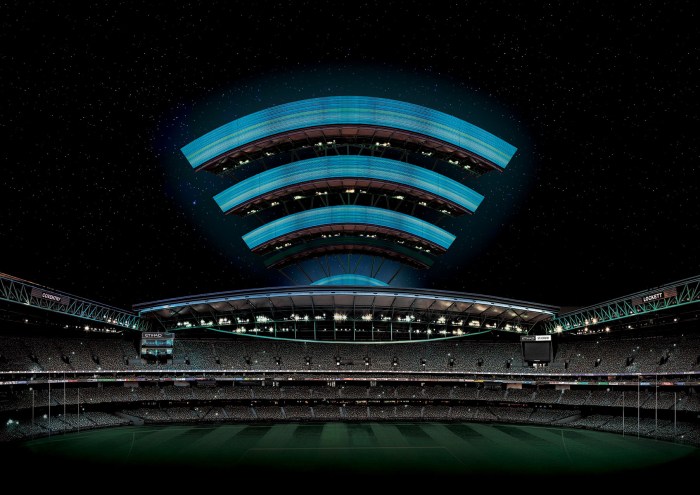
From Round 1 of the 2015 AFL Premiership season, fans at Etihad Stadium were presented with  exciting content displayed on the more than 1,600 IPTV High Definition screens and an enhanced connected live experience through the 704 high density WiFi access points that had been installed to provide attendees with fast and free internet connections when they are at the ground.

Fans could once again feel at home with the venue coming to life with its club colours through the 1,600 iPTV screens scattered around the stadium, LED ribbon displays in-bowl and access to all the content they would desire through the high density WiFi system.

Never again would a fan attend an event at Etihad Stadium and not be able to make a phone call due to congestion or struggle with connectivity to browse the internet and use their apps at will.  The media as they saw it at the time includes this article from The Age.
TheGameChangeStadiumRoof_Wi-Fi_LayLR_RGB

Confronting new technology and taking on the challenge was one of the most rewarding projects I have had to ever work on.  During the time, it was helpful to collaborate and seek the advice of a number of people and companies.  However, evolving the live experience at stadiums and arenas remains a challenge and rights holders and venues need to continue to grapple with the rapid pace of technology and a new generation of fans and how they want to consume sports and entertainment.

I recall spending countless hours with Manny Spanoudakis from Cisco, who has now become a very close friend since meeting as a result of this project, along with other industry experts sharing their experiences of the implementation of connected stadium strategies around the world.  This project wouldn’t have been possible without collaboration and inspiration.

In the end, actions spoke louder than words as we embarked on this exciting journey of discovery and dared to look into the future.

Sports broadcasting is also going to become an interesting sphere over the coming months and years. Major sports derive valuable revenue from sports broadcasting and with the various forms with which fans now consume sport, we will see a mix of rights via the traditional free to air television networks, subscription television and now the fast emerging over the top avenues provided by providers such as Netflix and Fetch.  English Premier League Australian rights for the 2016/17 season will shift from subscription television (Foxtel) to over the top (Optus / Netflix).

Furthermore, the broadcasters are beginning to demand more from the rights holders in terms of how the sport is presented and made more entertaining for the home viewer.  The Big Bash League on Network Ten is a prime example of this.  All of this leads to increased competition to the live experience and it all points towards rights holders and venues having to work even harder to deliver a better live experience than the in-home or from your own device experience.

Peter Filopoulos

Marketing the Big Bash League & Hyundai A-League   

Marketing the Big Bash League & Hyundai A-League   


Over the Christmas / New Year break, our family travelled back home to Melbourne to spend the festive season with our respective families. Having moved to Perth in August 2015, we haven’t had many opportunities to catch up with family since then, so we enjoyed our time back home for the week.

Whilst in Melbourne, we arranged to attend a couple of sporting events, including Perth Glory’s match against Melbourne Victory on Sunday 27 December at AAMI Park as a priority. At that match, Glory salvaged a point in a hard fought and controversial contest with the end result 1-1. A healthy crowd of 22,554 were in attendance, as is always the case at Melbourne Victory.    Perth Glory’s marquee player, Diego Castro, recruited from Getafe in the La Liga in Spain was on display and who has hit some great form in recent weeks.  The skill level displayed by Diego on the night was a delight to watch and every aspiring young footballer could benefit from watching this professional play football the way he does.  He was clearly the best player on the ground against Victory.  This is the quality fans can enjoy at A-League matches and also at that game, there was plenty of other quality on the pitch.  There is always excitement around players such as Besart Berisha and his duel with our defender Michael Thwaite on the night was outstanding.  Who could forget the controversial penalty decision for Besart and the reaction from our goalkeeper Ante Covic after the incident and also in the post-match interview.

Diego Castro
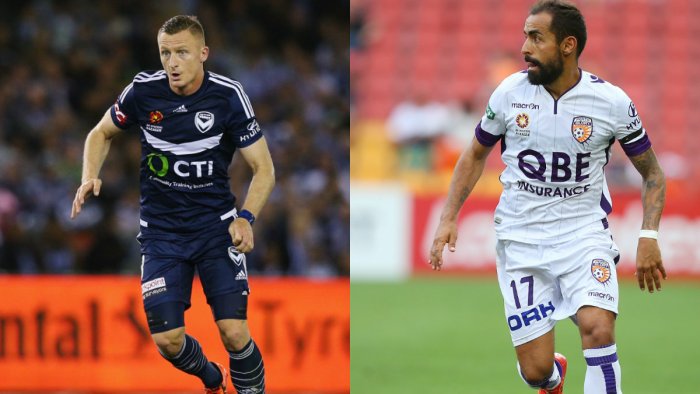
Melbourne Victory’s Besart Berisha on the left and Perth Glory’s marquee Diego Castro on the right
covic
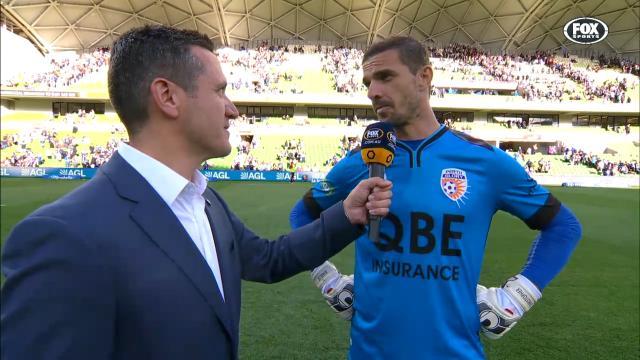
Ante Covic after the game with Fox Sports presenter Michael Zappone speaking about the controversial penalty decision.  Pure passion and emotion and whilst his comments were controversial, this is what the fans want to see at home.  It was great television.

That Wednesday, 30 December, we attended the Big Bash League game at Etihad Stadium between Melbourne Renegades and coincidentally the Perth Scorchers. It was opportune for me to return to a stadium where I spent seven years of my professional life and have so many fond memories. We saw our new home-town BBL team, the Perth Scorchers win and we were happy. The game itself didn’t really capture our imagination and whilst it was great to be there on a nice balmy Melbourne evening at a world-class stadium with the roof open, to us, the game wasn’t that exciting.   There was a fan sitting near by whom for some reason kept on yelling to his mates really loudly, “This is way better than soccer lads, at least we won’t see a 0-0 draw here”. I am not sure as to why he felt compelled to repeatedly tell his mates this, obviously the cricket wasn’t exciting enough. Ironically, I was in my seats thinking similar thoughts of the Big Bash League and how uninteresting it was, in fact, I enjoyed chatting with former colleagues in the Medallion Club more than watching the game.  I suppose it comes down to personal preference as I haven’t been a massive cricket fans since the Chappell days. Nevertheless, we enjoyed the evening experiencing the atmosphere and the jovial crowd.    There’s a lot going on off the pitch engaging the crowd which keeps it entertaining.

Leading up to this BBL match, I was impressed and intrigued with the remarkable free to air television numbers that the Big Bash League was attracting on Network Ten, over 1.26 million national average to be exact.  In comparison, the Hyundai A-League’s national average at present is 76,000 on SBS2 and 62,000 on Fox Sports, so when on the night of the BBL match we attended they announced a crowd of 28,000, I was not surprised at all. There’s a lot of hype around the Big Bash League despite their participation base compared to our soaring numbers.  Even stadium management were pleasantly surprised with the attendance that had projected around 20,000 to attend in planning.  It’s been well reported that event the Women’s Big Bash League is drawing a national average audience of  372,000.  To me this is a strong indicator that if the A-League was on a free to air network, we would do very well.    The numbers above are very hard to compare as they are not really apple with apple comparisons i.e. Free to Air television (BBL and WBBL) vs Fox Sports and the hidden SBS2 channels (A-League).  Only 30% of households have access to Foxtel and 4 of our 5 games each week are televised on this platform only with the 5th one on the hidden SBS2 Channel, so there is not much to take from this statistic other than to see the opportunity we have if the A-League had a free to air broadcast partner.

Where the difference lies between the two competitions is the marketing and PR.  The marketing of the Big Bash has been brilliant and it goes beyond just the great coverage Network Ten has been able to provide on the free to air network along with the promos across the network. In my short time in Melbourne over Christmas and New Year, the Big Bash League  saturated the market with tactical marketing messages. It was almost impossible to not know that the the BBL was on in Melbourne.  Personally I learned about the BBL via, emails, several radio stations we tuned into, television, outdoor advertising, plenty of editorial and advertisements in the press, radio and TV, targeted campaigns via Ticketmaster, Ticketek, social media, video content and it goes on and on and on. If you were in Melbourne over festive season and you didn’t know the BBL was in town that week, one game at Etihad Stadium and one at the MCG, a period where people are looking for something to do, you probably had your head under a rock.  This marketing is costing millions, funds that are readily available to Cricket through their broadcast and commercial deals and they are prepared to invest heavily in their BBL product.

It is clearly evident that the BBL marketing is integrated with a good mix of above the line and below the line tactics and a world class digital strategy which drives the large attendances.  The marketing is over-arching across the competition with localised components, a top down and bottom up approach.  Conversely, I did not notice much of a tactical marketing presence for the A-League at the same time and maybe it was drowned out by the noise around the BBL. Network Ten pushed the games very had on the network.  We clearly have some work to do in this space and as a collective we recognise and are addressing this as a priority.  What football has that cricket hasn’t is a large participation base from which we can draw upon.  It is here that I believe we can make a massive difference.  Linking the grassroots to A-League Clubs and driving them to our matches is a key.

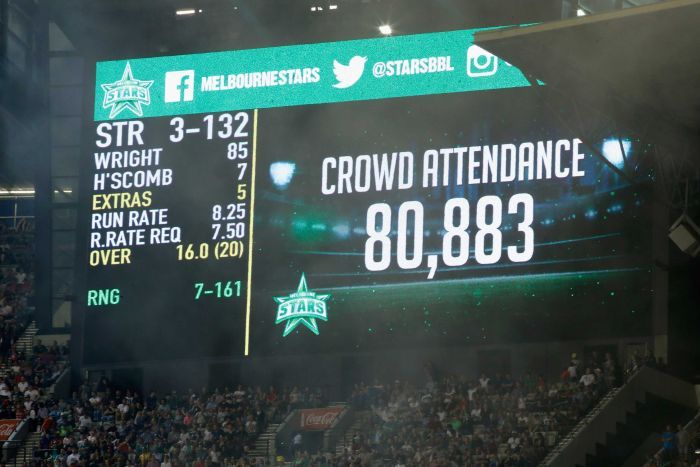
On the following Saturday night, 2 January, after watching Perth Glory unfortunately go down to Brisbane Roar on Fox Sports, we made our way to AAMI Park to watch Melbourne City Vs Sydney FC, a match I predicted would be a great spectacle. We weren’t disappointed, as we witnessed a fantastic game of end to end football with four goals scored ending in a 2-2 draw. The crowd was bigger than the normal Melbourne City crowds, however, at the same time, the twitter newsfeed was also telling me that a huge crowd was rolling up to the Big Bash League derby between Melbourne Stars and Melbourne Renegades across the bridge at the MCG. When the final attendances were announced at the respective venues on that evening, there were over 80,883 at the MCG for the Big Bash League and 10,140 at AAMI Park for the Hyundai A-League. In the earlier A-League match we watched on Fox Sports from Suncorp Stadium attracted 17,696 fans.

80,883 attending the Big Bash League is astounding! Across the Nullarbor Plain in Perth, the Scorchers also attracted 20,444 at the WACA.   Two (2) games of BBL attracting 101,327.  Across our five matches in the corresponding week, the A-League attracted around 70,000 fans to our matches.  Granted the BBL is a much shorter competition and we run over a 27 week period, but clearly we have to review what we are currently doing and how we can better market the A-League.  A-League is currently averaging 11,904 fans attending each game (9% down on last season) whereas BBL is averaging around 30,000 fans at their games at present on the back of last year’s 22,776.

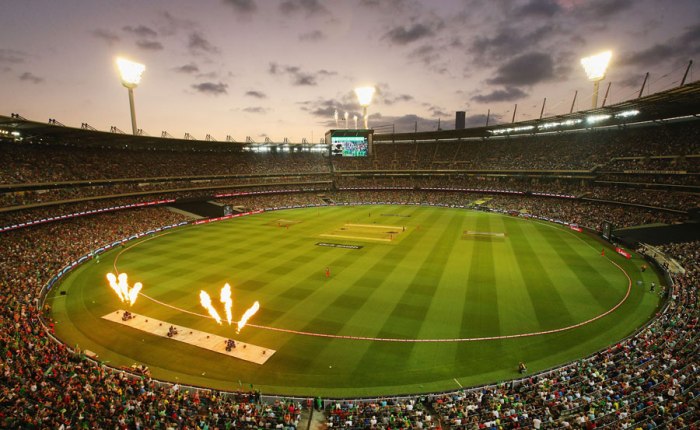
BBL Record Crowd Pic
The MCG Scoreboard proudly announcing the crowd figure at the Melbourne Stars Vs Melbourne Renegades Big Bash League fixture on Saturday 2 January, 2016

This got me thinking on the way home. What are Cricket Australia doing right and what are we as football not doing right? It has been top of mind since the other night and I cannot fathom how this could happen. Afterall, the Hyundai A-League is in its 11th season and the Big Bash League is in its 5th season, our participation base is soaring and cricket’s is not so and subjectively, I think our “organic” product is better than theirs.

To me it all comes down to marketing and PR.

Too often we hear, if only we football was on free to air television??? This may be true to a certain extent and we will definitely improve our broadcast numbers significantly on free to air television, however, we cannot look at the broadcast situation in isolation as the the solution to everything as I believe the big difference comes down to the way the Big Bash League is marketed compared to the Hyundai A-League.  The price of tickets is another learning from the BBL.

Cricket Australia has a powerful marketing division at head office and abundant in resources.  Perhaps an investment in our marketing capability is something we need to also review.  Of course it comes down to money and it is a cart and horse issue.  A better and more lucrative broadcast deal (as per the BBL’s with Ten) would provide much needed additional funds and resources to market the league more widely and aggressively.

The product on display at AAMI Park that we attended between Melbourne City and Sydney FC, was outstanding. The match was a fast, end-to-end, hard fought contest with plenty of skill and vigour on display and with four great goals scored. Earlier on Fox Sports, we watched another great game between Brisbane Roar and Perth Glory with three goals scored. My two sons and I were pretty satisfied with the two matches we had watched having seen seven goals and some great football, despite our disappointment at Glory’s loss who had shown some great endeavour and were unlucky not to secure at lease a point from our visit to Suncorp. Both these games deserved much bigger attendances, particularly the match at AAMI Park.

In Perth, our crowds have ranged between 7,000 – 9,000 this year and we have a lot of work to do in this regard.  We have had some challenges around scheduling given our unique circumstances in this market with heat, however, we now have Saturday night kick-offs at 6:40pm and are looking to building upon these attendances in the coming weeks.  Our results over the last 5 weeks should hopefully help the cause where we have won 2, drawn 2 and lost 1.  This Saturday night for our match against Adelaide United at nib Stadium, all kids come free with a paying adult and hope to see as many people take up this opportunity for what should be a fantastic game between two clubs coming into the game with strong recent form.

We have a busy few weeks coming up as the January transfer window opens on Tuesday 5 Jan as we try to bolster our team with some new players, so watch this space.

Peter Filopoulos